

The tragic June 2026 school shooting in Tacloban City shook the Philippines. The incident echoed similar tragedies in America, Europe, and other parts of the world, raising immediate questions about safety and society. Despite the country’s strict firearm regulations and the fact that most Filipinos cannot afford guns, it is deeply concerning that such violence has reached our shores. In response, the government has begun investigating how the suspects accessed firearms. However, authorities have also shifted blame toward video games, claiming they inspired the students to commit the act. According to reports, the Tacloban shooting suspects were allegedly influenced by a violent game called Gorebox. In a populist effort to address this pressing issue, Senator Risa Hontiveros has demanded answers from the game’s developers. With evidence suggesting Gorebox was a favorite of the suspects, the Philippine government is now considering a blanket ban on video games to address growing public anxiety.
The Cybercrime Investigation and Coordinating Center (CICC) has temporarily blocked the sandbox game GoreBox, and Department of the Interior and Local Government (DILG) Secretary Jonvic Remulla publicly urged a permanent ban on violent online games, claiming they “desensitize young people to the elements of death, violence, and murder.”
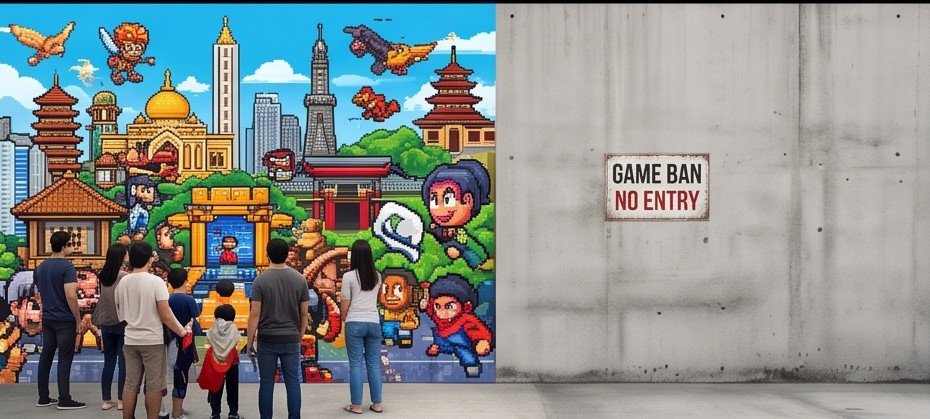
Then, social media posts like the one below started circulating on Facebook Gaming pages, Reddit, and more. While it is just satire, the gaming community picked it up and got angry over it.
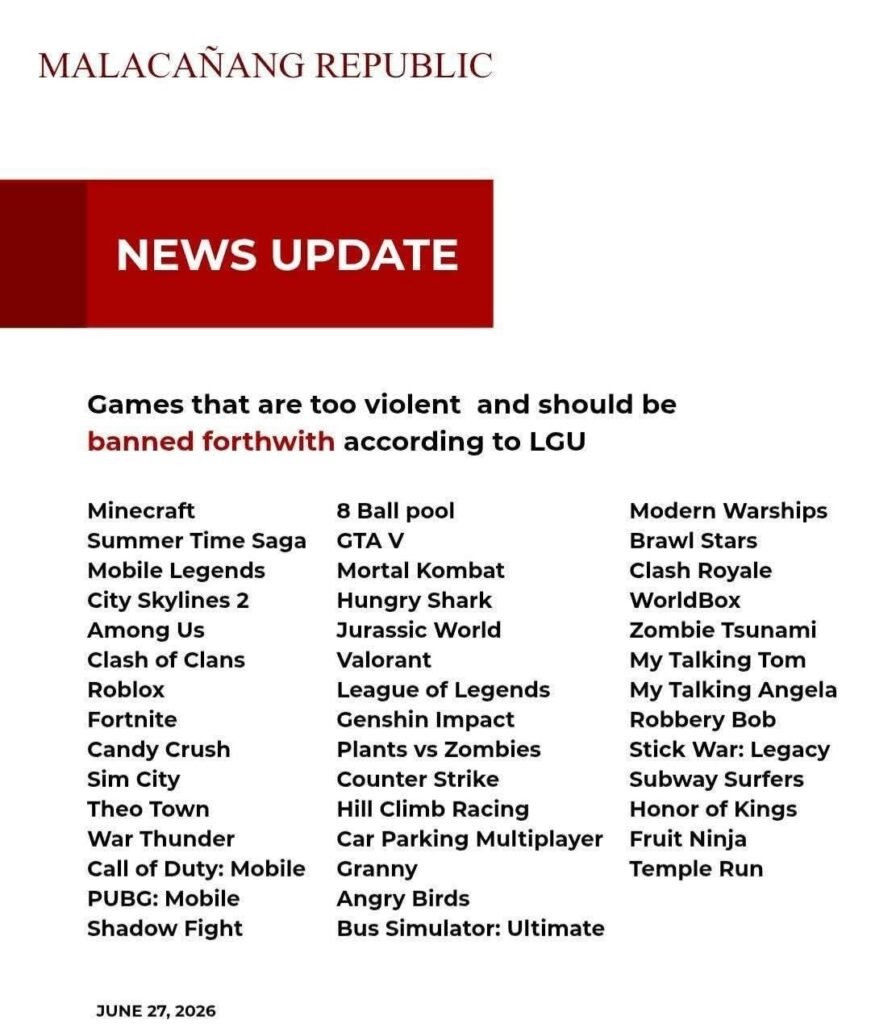
While we do want to keep young kids from accessing violent video games, proposing a blanket ban is definitely not the solution.
No real connection between violent video games and school shootings
First, there have been decades of global scientific research that consistently show that video games are a convenient scapegoat rather than a root cause of societal violence.
Senator Bam Aquino, who currently heads the Senate basic education and science and technology panels, said recently, “Video games have been here for almost 50 years, but it’s always a convenient scapegoat… banning video games in general or as a whole, I don’t think that’s a good solution.”
The data strongly supports this perspective. As mentioned earlier, studies have repeatedly concluded that the statistical correlation between playing violent video games and committing lethal, real-world acts of violence is near zero. Tragic acts of youth violence are almost always driven by deep-rooted socioeconomic fractures, mental health struggles, and gaps in gun control.
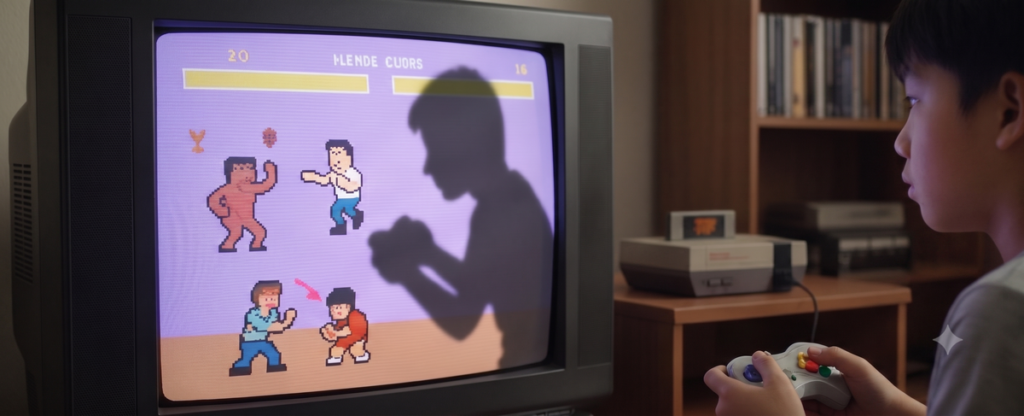
The Gaming Industry sustains millions, and entertains billions
Furthermore, a blanket prohibition ignores the immense economic reality of the global and local gaming sector. The video game industry is one of the largest entertainment sectors on Earth, generating well over $180 billion annually and employing millions globally, from software developers and writers to artists, audio engineers, and cybersecurity professionals.
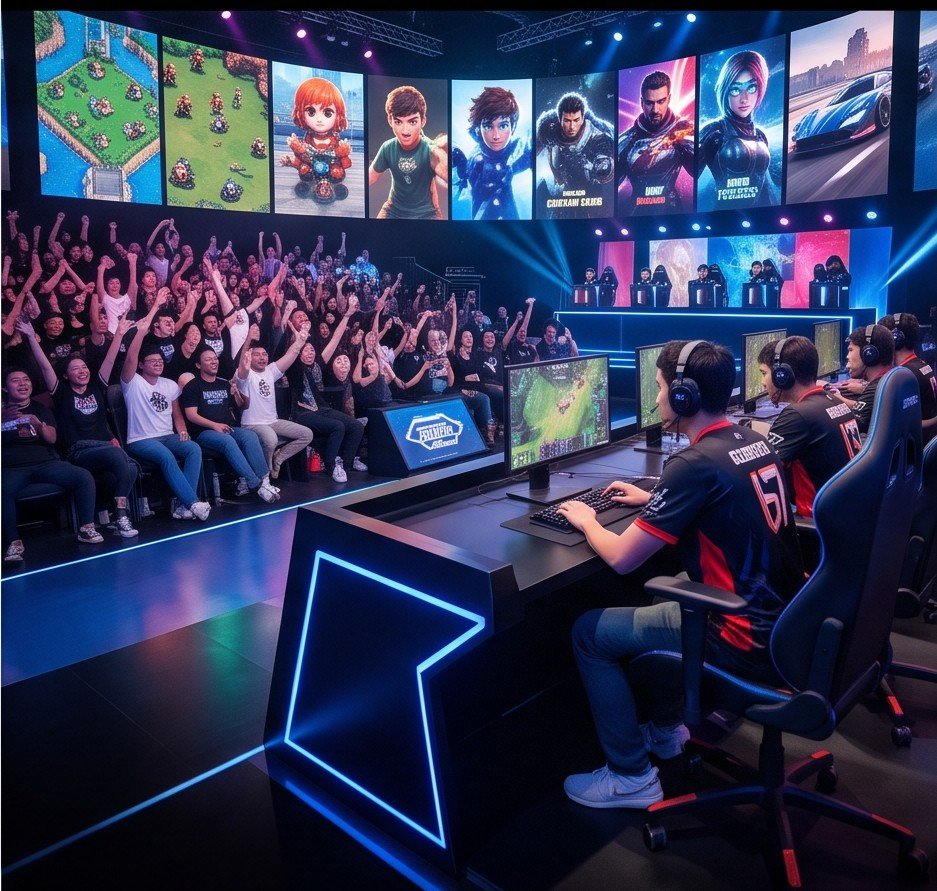
In the Philippines, the gaming industry is an active engine of upward social mobility. It has allowed Filipino developers, content creators, and competitive esports athletes to build lucrative international careers without leaving their hometowns. At TGXP³, we’ve talked about Filipino developers releasing role-playing games, horror games, and bullet-hell/heaven games. Some have even gamified Philippine history to make it more appealing to the latest generation.
Banning or heavily restricting this medium would cut off high-paying digital jobs and cripple local tech studios exactly when the country needs to accelerate its digital economy.
Gaming goes beyond entertainment
Beyond the economics, gaming is an essential medium for inspiration, education, and community support. Over the past years, numerous industry reports have highlighted how multiplayer gaming serves as a lifeline for mental well-being, helping young people cope with anxiety by providing a structured social connection. Far from promoting isolation or malice, gaming has inspired thousands of young Filipinos to pursue STEM (Science, Technology, Engineering, and Math) education, sparking lifelong interests in coding, digital design, and complex problem-solving.
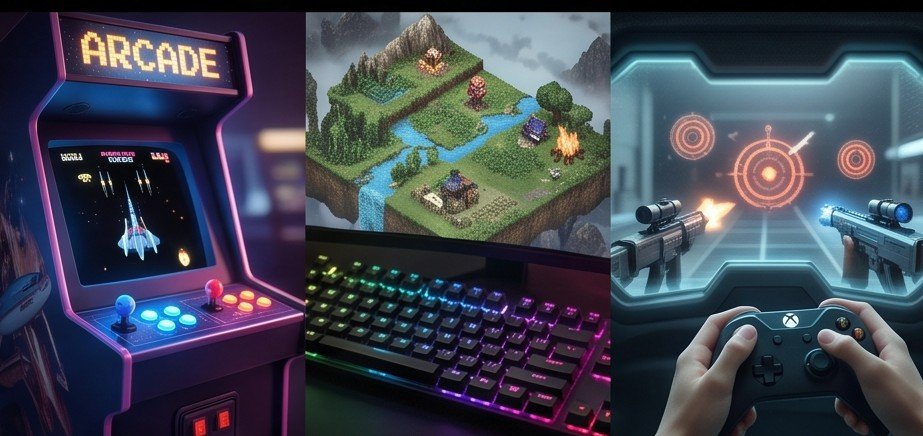
But there is a personal reason for not agreeing to this video game ban. I’ve been a gamer for most of my life. I’ve been playing video games since 1977 (or was that 1976?) and Pong was my first game. Then came Atari, ColecoVision, a portable Space Invader game, several Game & Watches, NES, and the list goes on.
I’ve played arcade games like Warlords and Pitfall, and eventually graduated to computer role-playing games. Now I’m still playing violent games like Doom, Quake, Halo, Gears of War, Modern Warfare. My own kids play video games. My brothers play video games, and their own kids do too.
Gaming is one of the reasons why I went into tech journalism. To understand how technologies work, how graphics, processors, and coding make it all come together so we can work faster with computers, ask how to cook Adobo with lots of soy sauce by just asking our phones, and even ask AI to help me scour the internet for new content.
It’s a popular pastime and a way to blow off steam after a long day. Or bond over it as I do with my kids and like they do with their cousins and friends. It is a lifeline for many people, myself included.
Banning video games is a bad idea
A blanket ban on video games isn’t the solution. It’s a stupid one (there I said it). It could prove detrimental to 64 million people who play video games in the Philippines, the local industries and companies engaged in it (and the people employed), and more. That number came from the Game Developers Association of the Philippines (GDAP).
Solutions that work for local gaming
So what can we do? Well, we’ve been talking about adopting a games ranking system since the late 90s.
The rest of the Western world has the PEGI (Pan-European Game Information) and ESRB (Entertainment Software Ratings Board), which use a video game age- and content-rating system for all video games released. The PEGI system assigns age ratings to games, while the ESRB labels games from Everyone (everyone can play) to Mature. We can do one like that. We can either use these rating systems or develop our own. But once we do, we have to strictly implement it.
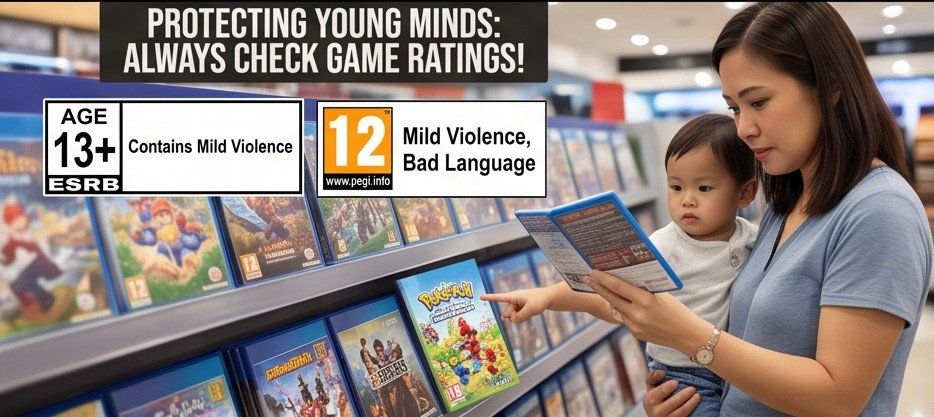
And that means parents have to support it and prevent young kids from accessing mature titles. I remember seeing a 10-year-old kid playing GTA IV, a particularly mature and often violent video game, in a toy store. He had his dad with him, who was happily talking to another game guy. That sort of thing shouldn’t happen. There has to be enforcement and proactive governance.
Proactive governance means implementing strict, age-appropriate rating systems and empowering parental oversight, rather than wielding a blunt instrument of total censorship. The Philippine government must look beyond the screen to solve complex societal problems. Rather than pressing “delete” on an entire industry, we must address the real-world factors behind youth violence while nurturing a digital space that creates jobs, fosters creativity, and connects millions.
We need to educate parents and guardians on the possible effects of unrestricted access to violent video games. We also need to educate more politicians about the benefits of gaming, as many don’t understand the economic, mental, and societal impacts of banning video games. Senator Bam Aquino is just one of the louder voices, as he is also a gamer.
We should also look at how social media algorithms affect people’s behavior. There’s evidence that these platforms let more harmful content show up in our feeds, especially since outrage keeps people engaged.
I’m glad that a few politicians have backtracked and clarified their statements on violent video games.
Real world vs. the real
And to curb gun violence, let’s put a tighter leash on gun control. Educate not just gun owners but people who are in the military and in the police force on the proper storage of their firearms. Put it in a safe or storage where kids can’t get to it. Educate kids on how dangerous firearms are and prevent them from getting access to firearms.
Be cognizant of mental health as well. Talk to your kids about what’s going on with them, what’s troubling them and how you can help. An ounce of prevention goes a long way.
In the wake of tragedy, it is natural to seek solutions that protect our children and make our communities safer. But targeting video games through blanket bans is not only ineffective but also potentially harmful to millions of Filipinos who benefit from gaming economically, socially, and emotionally. Decades of research have disproved the myth that violent games directly cause real-world violence, while the gaming industry continues to empower, employ, and inspire countless individuals in the Philippines and beyond.
The real solutions require a more nuanced approach: strict but fair age ratings, active parental involvement, stronger gun control, and a deeper investment in mental health. By focusing on these root causes and educating both policymakers and the public, we can protect our youth without stifling creativity, community, and economic growth. It is only through balanced, evidence-based action that we can move forward. We must remember those affected by tragedy, while ensuring that fear does not dictate our future.