

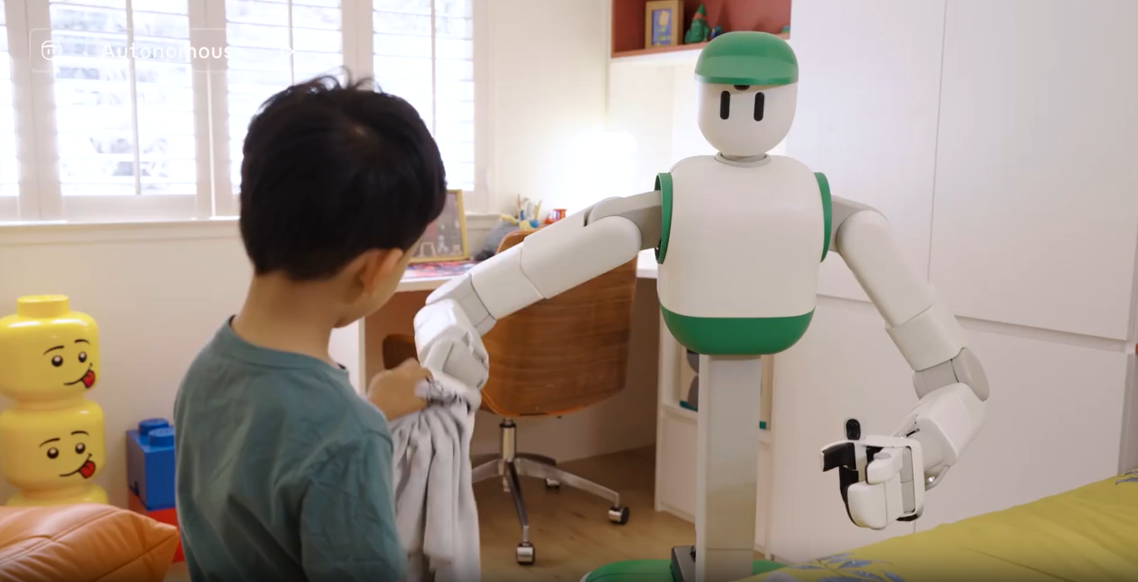
Robots that can actually help at home have been a long-standing goal for consumer tech. The challenge has always been getting a robot to work outside the lab, where real homes are unpredictable and messy. Sunday Robotics is taking a practical step forward with its latest foundation general-purpose robot model, ACT-2. In recent demos, ACT-2 folded laundry in unfamiliar homes and reached a 99.1% success rate.
Closing the Generalization Gap
Robotics has long struggled with the “generalization gap.” A robot that works well in the lab often fails when it faces new lighting, room layouts, or objects. Training on narrow data leads to overfitting, so the robot becomes reliable in the lab but unreliable in real homes.
ACT-2 addresses this with what Sunday Robotics calls “generalizing reliability.” The company scaled up pretraining using a diverse, high-quality dataset, giving the model a stronger baseline understanding of the physical world. This approach helps close the generalization gap.
With this base model, skills taught in the lab now carry over to real homes. Sunday Robotics says that ACT-2 can learn a new physical task from a single demonstration and then perform it reliably in places it has never seen before.
Laundry Folding general-purpose robot?
Laundry is a common chore, but for robotics, it is a tough test of general intelligence.
Folding laundry is more complex than moving boxes or parts. Clothes deform, stretch, and never start in the same position. ACT-2 was tested on nine types of garments, from T-shirts and blouses to pants and leggings, in sizes from XXS to 8XL.
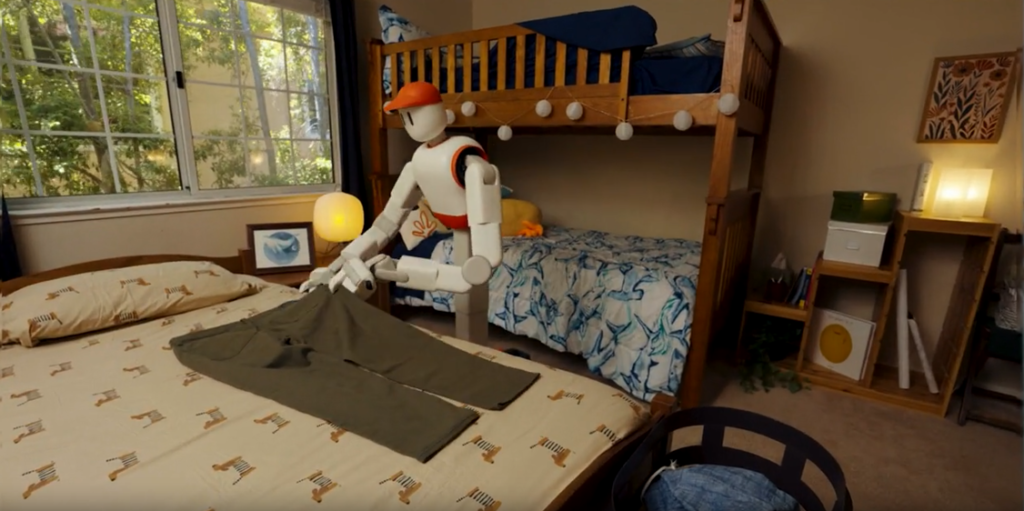
The robot folded clothes from crumpled piles on beds, floors, and in baskets, reaching a 99.1% success rate over nearly 800 autonomous attempts. According to Sunday Robotics, this was done zero-shot, with no on-site adaptation, no home-specific training data, and no fine-tuning in the test environments. The same software model was used throughout.
The Final Step to the Home
Sunday Robotics views the home as the ultimate proving ground for general AI because houses represent a “long tail” of infinite variation. If a robot requires an engineer to map your specific bedroom before it can fold a shirt, it isn’t a viable consumer product.
By showing that one generalized model can handle the complexity of laundry folding in many different homes, Sunday Robotics says that ACT-2 sets a new benchmark for the industry. It shows that scaling up training can address real-world unpredictability. As Sunday Robotics targets a 2026 launch, ACT-2 is more than a laundry-folding demo. It is a sign that general-purpose home robots are getting closer to reality.
For more tech news and updates, stay tuned to TGXP3.com.