


PulseAI, a medical technology company developing artificial intelligence for cardiac diagnostics, announced U.S. Food and Drug Administration (FDA) 510(k) clearance for its AI-powered arrhythmia analysis model for wearable health devices.
Smartwatches are everywhere now, and most can track your heart rhythm. IDC reports that 164 million smartwatches were sold worldwide in 2025. This puts heart rhythm recording in the hands of everyday users, not just hospitals. The big challenge for healthcare providers is figuring out how to use all this new data without adding extra work for clinical staff.
How PulseAI Tech on Wearable Health Devices Work
One of the biggest headaches is dealing with inconclusive results. When an ECG reading isn’t clear, it often means more manual reviews, repeat tests, and extra follow-ups. Reducing these inconclusive results could save staff time. Plus, it’ll definitely help clinics handle more patient recordings without needing more resources.
Atrial fibrillation, or AFib, is the most common long-term heart rhythm problem, affecting tens of millions of people worldwide. It often shows up without symptoms. If left untreated, it can raise the risk of stroke by about five times. Spotting AFib early lets doctors assess stroke risk and decide on the right treatment.
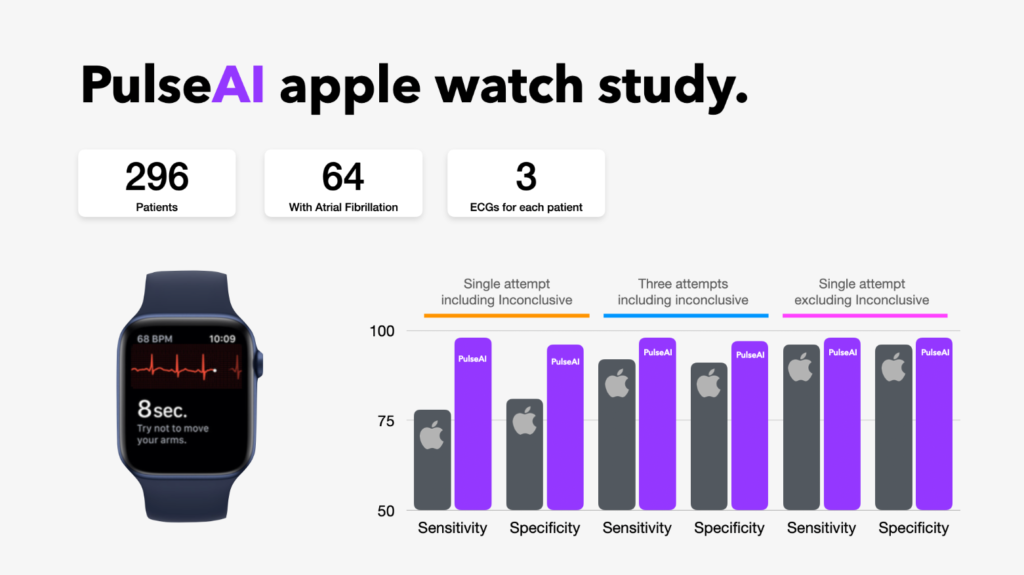
In a study with 296 participants published in Heart Rhythm, PulseAI’s AI algorithm not only improved AFib detection but also cut inconclusive results by 92% compared to the Apple Watch’s built-in algorithm.
Wearable health devices have made ECG recording widely accessible, and PulseAI is committed to matching this expanded access with better accuracy to deliver a truly scalable system for healthcare providers. The FDA clearance of PulseAI’s AI-powered arrhythmia model marks an important step toward this goal, enabling the embedding of advanced arrhythmia analysis into devices and platforms used by millions every day.
PulseAI’s technology works with compatible ECG devices and software platforms. The cloud analyzes recordings automatically, then sends the results back to the app for clinical review.
We’ll likely see PulseAI’s tech cross the ocean onto our shores and into our smart wearable health devices by next year. And it could be a godsend for people who monitor their heart health and conditions.
For more tech news and updates, stay tuned to TGXP³.