

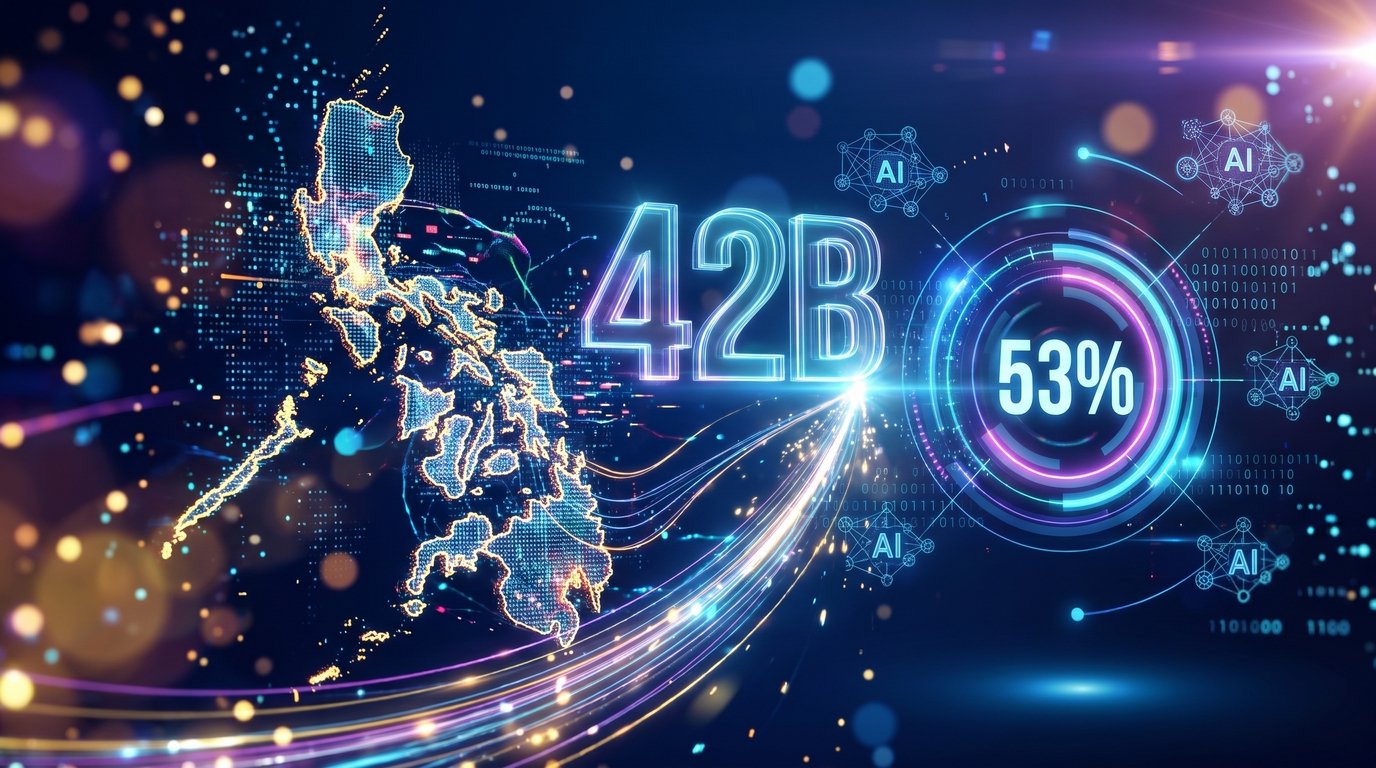
The Philippine digital economy is growing fast, driven by strong demand AI and e-commerce adoption. The latest e-Conomy SEA 2026 report from Google, Temasek, and Bain & Company projects that the country’s digital economy will reach a gross merchandise value (GMV) of $42 billion by the end of this year.
This $42 billion figure is a 15 percent increase from $36 billion in 2025. Analysts say the Philippine market could reach $157 billion by 2035. While the country’s GMV growth is just below the Southeast Asian average of 17 percent, the Philippines stands out for its improving digital payments and growing use of AI in the workforce.
Generative AI is playing a big role in this growth. The report shows that 53 percent of the Philippine workforce now uses standalone Generative AI platforms, or about 42 million people. If you include AI features built into everyday apps, the number of monthly users goes up to around 65 million.
Filipinos integrate AI into their lives
Filipinos are making AI part of their daily lives. The study says that about 80 percent of AI use in the country is for consumer apps. The top five ways people use AI are for studying, work, health, online shopping, and entertainment. Altogether, users in the Philippines generate about 55 billion AI queries each year.

Even with these big numbers, there’s still room for more regular use. Right now, only about 14 percent of users use AI tools every day, so most people are still just trying them out. But trust in AI is growing. Half of users say they trust AI more now than a year ago. For digital marketers and e-commerce, it’s worth noting that seven out of ten Filipino users are open to letting AI assistants help with purchase decisions.
This growing trust is helping drive the digital economy. E-commerce is still the biggest part, growing by 15 percent this year to $28 billion. Online media is the fastest-growing area, up 26 percent to $6 billion, and online travel is expected to grow by 14 percent to $3 billion.
AI and e-commerce synergy that works
Financial technology behind these transactions is also growing quickly. Digital payments are a highlight, helped by programs like InstaPay for Business and better payment system integration. The total value of digital payments is expected to rise by 23 percent to $194 billion in 2026, the fastest growth rate in Southeast Asia.
Experts say that to keep this momentum, more people need to use AI in their daily work. National policies are already helping make this happen. The National AI Center for Research and Innovation (NAICRI), guided by National Privacy Commission rules, and the new Internet Transactions Act are building trust in digital tools.
With physical and digital commerce coming together, the Philippines is becoming not just a big consumer of digital products, but also an active player in the global digital economy powered by AI. For businesses and creators, smart technology will shape the future of Philippine commerce.
For more tech news and updates, stay tuned to TGXP³.