


We’re pretty sure you’ve worn wearable tech or devices to monitor your step count/or monitor your heart rate, and more. Well, more people will use wearable health devices in the coming years, as the market for them is expected to grow by up to 14.7% by 2032. That’s according to the GCC Wearable Health Devices Market report.
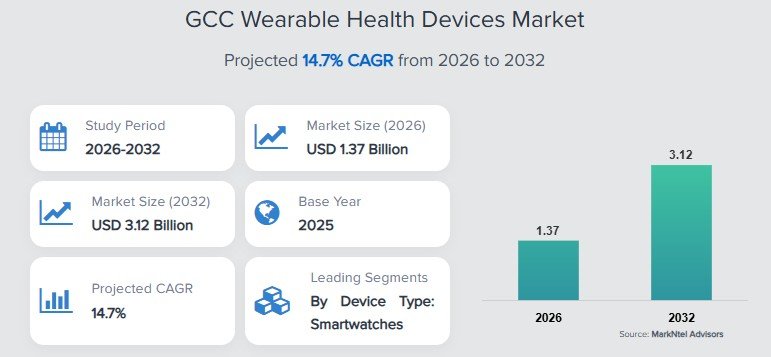
The wearable health devices market is set for strong growth, with a projected annual rate of about 14.7% from 2026 to 2032. More people are living with chronic diseases, and digital health tech is catching on fast. Remote patient monitoring is also in high demand. Saudi Arabia is leading the way, expected to hold 37% of the market in 2026, thanks to major investments in healthcare and a national push for digital health under Vision 2030.
GCC Wearable Health Devices Market Key Takeaways
- In 2025, the market was worth $1.05 billion and could hit $3.12 billion by 2032. Diagnostic and monitoring devices are out in front, making up about 44% of the market in 2026. Smartwatches are also popular, holding around 42% share, thanks to their many features and easy connection with health apps.
Key Growth Drivers
Remote Patient Monitoring: More people are using it, helping drive the market. Wearable devices let users track things like heart rate, blood pressure, and glucose levels in real time. This helps with early diagnosis, faster treatment, and fewer hospital visits, especially for people managing diabetes or heart disease.
Digital Health Integration: Across the GCC, governments and healthcare providers are building systems that connect wearables with smartphones, cloud services, and health apps. New advances in AI, sensors, and data analytics are making these devices more accurate and useful for both everyday users and medical professionals.
Preventive Healthcare Demand: More people are focusing on their health and have extra income to spend on wellness. This is boosting sales of smartwatches, fitness trackers, and wearable sensors. For many, these devices are now seen as must-haves for long-term health management.
Key Barrier
Even with all this growth, there are still some hurdles. Data privacy is a big concern, since wearables collect sensitive health information. High prices for advanced devices can also make them less accessible for some people. As technology improves and more companies enter the market, these challenges should get easier to manage.
Market Analysis by Product Type, Device Type & Country
Diagnostic and monitoring devices are leading the market, with about 44% share in 2026. Tools like CGM systems, ECG monitors, and multiparameter trackers are becoming part of everyday care for people with chronic conditions. Therapeutic devices such as insulin pumps and neurostimulation systems are increasingly used in clinics and at home.
Smartwatches are the top device type, holding about 42% of the market. People like them for tracking fitness, monitoring health, and staying connected to their phones. Wearable patches, smart clothing, and fitness trackers are also becoming more popular for both medical and everyday use.
Interestingly, Saudi Arabia makes up about 37% of the regional market. Big investments in healthcare, rapid adoption of digital health, and national prevention programs are helping the country stay ahead. Saudi Arabia is expected to keep its lead in the coming years.
Download the full report here.