
The world is heading toward a hyperconnected future, and the Philippines is right in the thick of it. Cisco recently released its latest “State of Wireless” factsheet for the country, and it’s a mixed bag: we’ve made big progress, but some stubborn challenges remain. The goal? Close the digital divide and create new opportunities for everyone.
Rising Wireless Connectivity in the Archipelago
The numbers are up. Cisco says the Philippines now has almost 79 million internet users as of 2023, with internet penetration at about 71%. That’s a big jump from just a few years ago. What’s driving this? Cheaper smartphones and better data deals from Globe, Smart, and DITO are making it easier for more Filipinos to get online.
Wireless connectivity has become an essential key resource for Filipinos, especially as remote work, online education, and digital services have become more entrenched following the COVID-19 pandemic. Mobile networks remain the backbone of national connectivity, serving as the primary access point for over 97% of internet users, particularly in rural and remote areas where fixed broadband infrastructure is still limited.
Enterprise Wireless: A Driver for Business Transformation
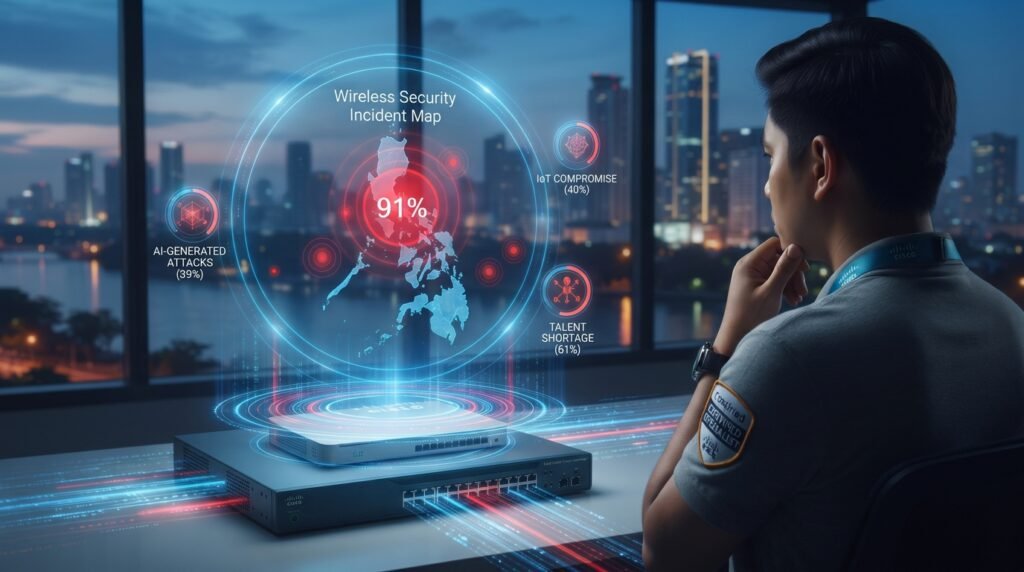
Wireless tech is changing how businesses work in the Philippines. With Wi-Fi 6 and 5G rolling out fast, companies are becoming more efficient and delivering better customer experiences. Retail, hotels, factories, and hospitals are all using these new wireless tools for live data, automation, and smoother teamwork.
Cisco found that almost 60% of businesses here say wireless is mission-critical. More companies are investing more into secure, reliable wireless networks because they know it’s key for hybrid work and leading the way.
Challenges: Closing the Digital Divide and Infrastructure Gaps
But it’s not all good news. The digital divide remains a major problem. Rural areas still lag behind cities in internet access and speed. Cisco says about 38% of Filipinos, mostly in remote provinces, still don’t enjoy consistent internet.
Building better networks isn’t easy when you’ve got over 7,000 islands to cover. Red tape, high costs, and tough logistics are slowing down the rollout of fiber and new wireless tech. Even though speeds are getting better, we’re still behind most of our Southeast Asian neighbors.
Government Initiatives and the Road Ahead
The government is trying to fix these gaps. Projects like “Free Wi-Fi for All” are bringing internet to public places, schools, and government offices. The DICT is also working to make permits easier and encourage private companies to invest in better telecom infrastructure.
Cisco says government-private partnerships are key to connecting everyone faster. They’re pushing for smart investments in new wireless tech, cybersecurity, and digital skills so Filipinos are ready for the future.
Looking Beyond: A Wireless-Driven Digital Economy
Wireless tech sits at the heart of the Philippines’ push to connect everyone. Cisco’s factsheet shows we’re close to a real digital transformation, driven by demand and innovation, but we still face major roadblocks.
If we keep investing, adopt the right policies, and leave no one behind, the Philippines could leap ahead. Wireless could power our economy, help society move forward, and keep us competitive with the rest of the world.
For more tech news and updates, stay tuned to TGXP³.