

War has a way of forcing the world’s hand. Since the US and Israel launched military operations against Iran on February 28, 2026, the global energy market has been in a state of shock. The Strait of Hormuz, the narrow chokepoint through which roughly one-fifth of the world’s oil and natural gas flows, has been effectively shut down, sending crude oil prices surging past $120 a barrel. Natural gas prices in Europe and Asia have spiked by more than 60%. The International Energy Agency has called it “the greatest global energy security challenge in history.”
For households already stretched thin, the war is acting like a massive new tax, further reducing their buying power and forcing them to forego even basic needs. Our dependence on oil and gas from politically volatile regions is not a strategy; it’s a vulnerability.
This may be the moment that changes everything. The same conflict driving up the cost of fossil fuels is making green and renewable energy technologies more competitive, more urgent, and more politically viable than ever before. Solar, wind, green hydrogen, and long-duration battery storage are no longer just climate solutions; they are essential to the future of the world. They are energy security solutions. And in 2026, the green energy landscape is rising to meet that moment.
From breakthrough solar cells to AI-powered virtual power plants, here’s a look at the green tech making headlines in 2026, and why this time, the transition may finally be unstoppable.
1. The Perovskite Breakthrough: Super-Efficiency
Solar
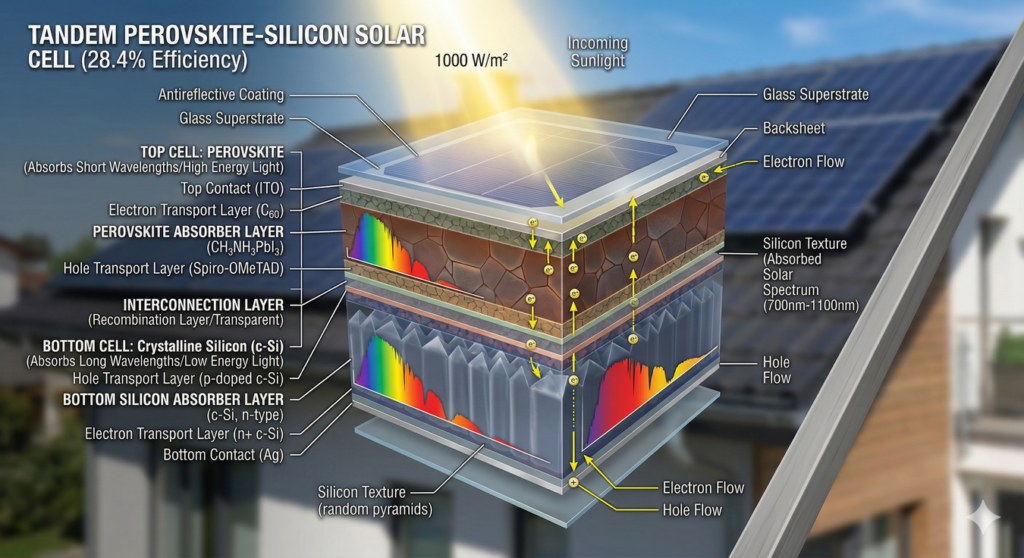
For decades, silicon has been the king of solar, but 2026 could be the year Tandem Perovskite-Silicon Cells become commercially available. By layering a thin perovskite film over a traditional silicon base, these “tandem” cells can capture different parts of the light spectrum.
- The big news is that commercial solar panels now reach 25-28% efficiency, up from the usual 18-22%.
- That’s about 30% more power from the same roof, so even small homes, electric cars, and portable devices can now run on solar where it wasn’t possible before.
2. Gravity and Compressed Air: Salt Mine Batteries
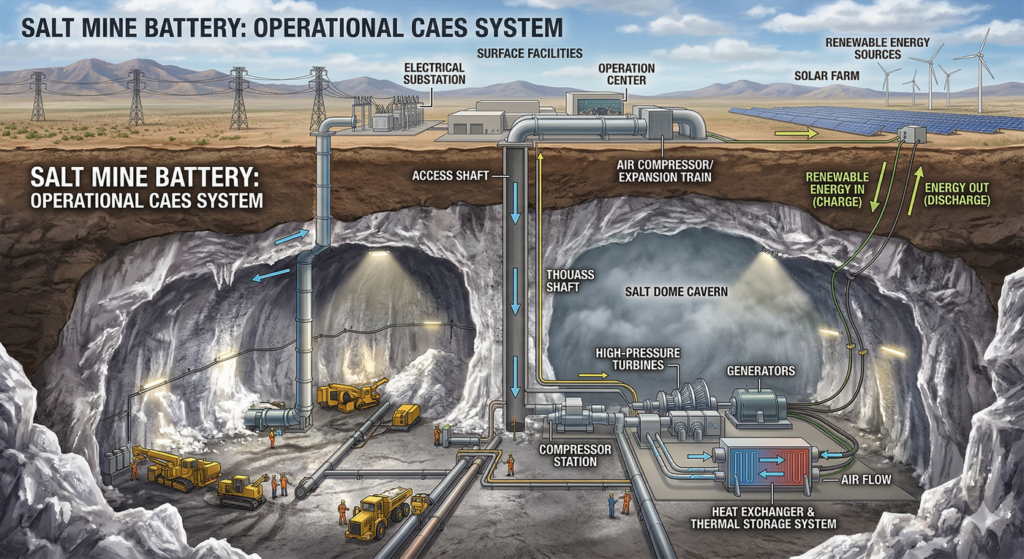
With more solar and wind on the grid, storing energy for nighttime use is the next big hurdle. This year, non-lithium long-duration storage is finally taking off.
- Compressed Air Energy Storage is now using old salt caverns as giant energy banks. During the day, extra electricity powers underground air pumps. At night, that air is released to power turbines and keep the lights on.
- Sodium-ion batteries are now a real option for homes. They’re a bit heavier than lithium, but they cost less, are safer, and use common salt instead of rare metals.
3. The Hydrogen Hype Becomes Heavy-Duty Reality
Green hydrogen, made by splitting water with renewable power, is now moving beyond test projects and into heavy industry.
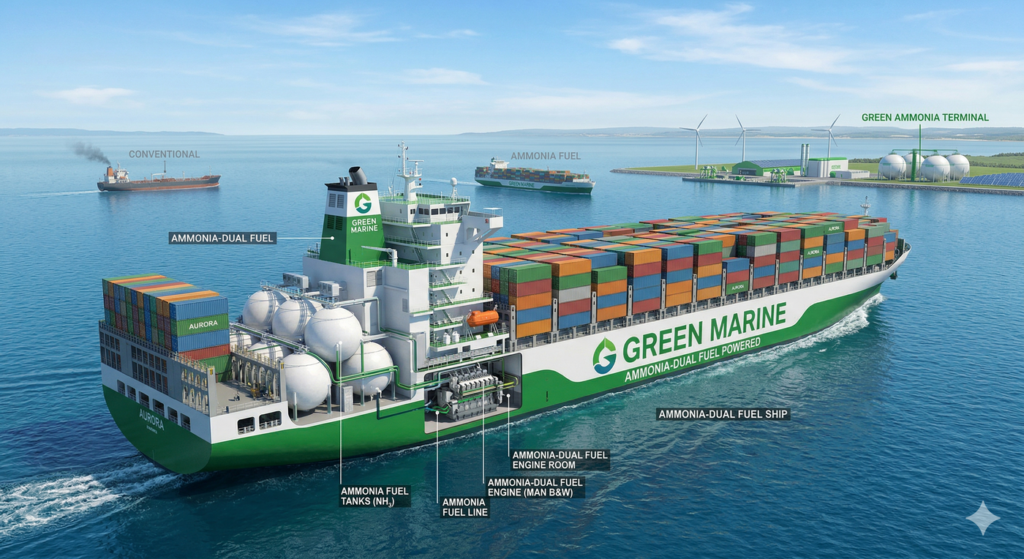
- This year, the first big cargo ships running on ammonia are hitting the water. Ammonia is a green hydrogen fuel that’s easier to store and ship across long distances.
- At the AERO Hydrogen & Battery Summit this April, new cooling tech for hydrogen fuel cells was on display. These advances mean electric motors are now powerful and light enough for real regional flights, not just prototypes.
4. Virtual Power Plants (VPPs) & AI Scheduling
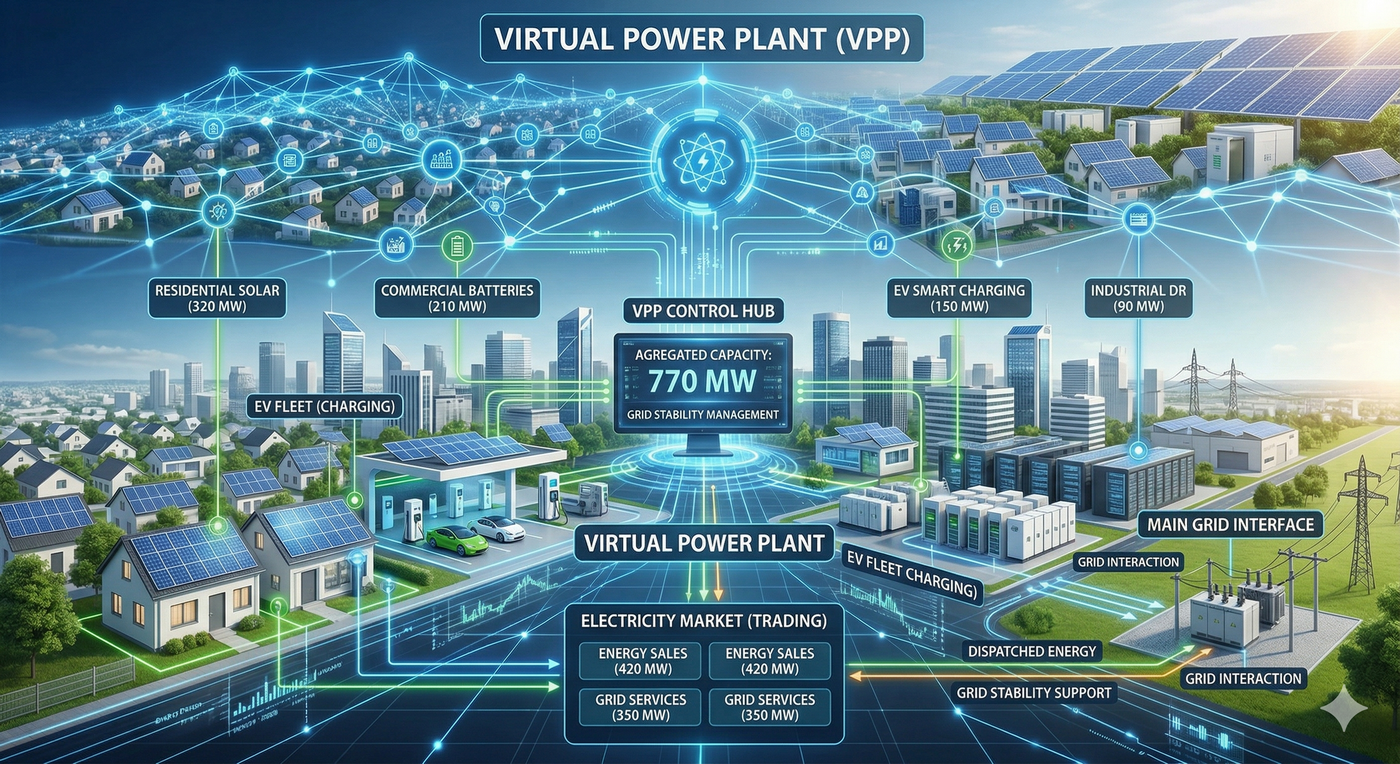
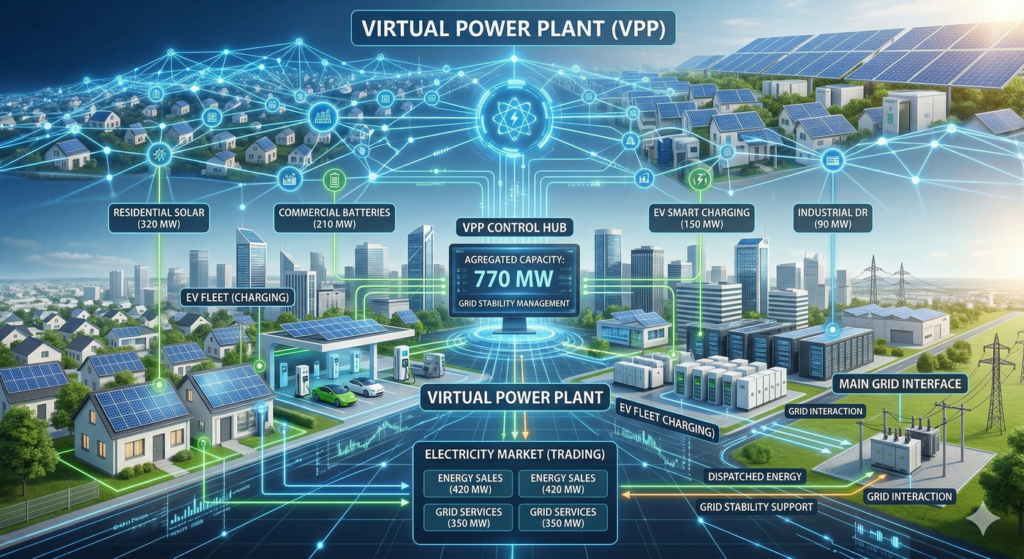
One of the biggest changes this year is behind the scenes: AI-powered energy management. Now, home batteries and solar panels work together as part of a virtual power plant.
- In places like Europe and the US, too much solar can actually push electricity prices below zero. Smart inverters now use AI to stop sending power to the grid and start charging your home battery or EV when prices dip, so you don’t lose money, and the grid stays balanced.
- Utilities are now paying homeowners to use their home batteries during peak times, helping keep the grid stable and putting money back in your pocket.
5. Enhanced Rock Weathering (ERW)
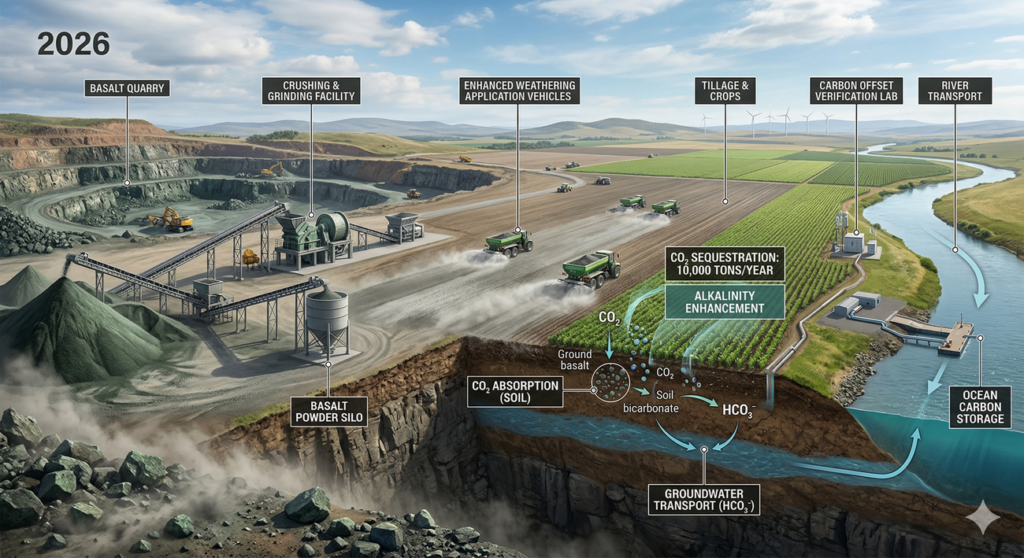
2026 is also seeing a big push for carbon removal, not just cutting emissions. Enhanced rock weathering is one of the most promising new approaches.
- Here’s how it works: companies spread crushed basalt rock on farmland. Rain helps the rock soak up CO2 from the air, turning it into a stable form that washes into the ocean and locks away carbon for the long haul.
- Big names like Google and Microsoft are now backing these projects, seeing them as a more lasting and scalable way to offset carbon compared to planting trees.
It’s a relatively new green technology that needs further study, but if proven, it could be one of the most readily available climate-control materials we can use.
Summary of 2026 Green Tech Trends
| Technology | 2026 Status | Primary Benefit |
| Tandem Solar | Commercial Launch | 25%+ Efficiency; more power in less space. |
| Sodium-Ion | Mass Production | Cheaper, fire-safe home energy storage. |
| CAES | Utility-Scale | Uses old mines to store days’ worth of power. |
| Green Ammonia | Maritime Adoption | Decarbonizing the global shipping industry. |
| AI VPPs | Software Standard | Automatically trades energy to maximize ROI. |
2026 shows that going green isn’t just about cleaner energy anymore. It’s about building a smarter grid that can store, move, and manage power exactly where it’s needed.
For more green technology news and updates, click here.