

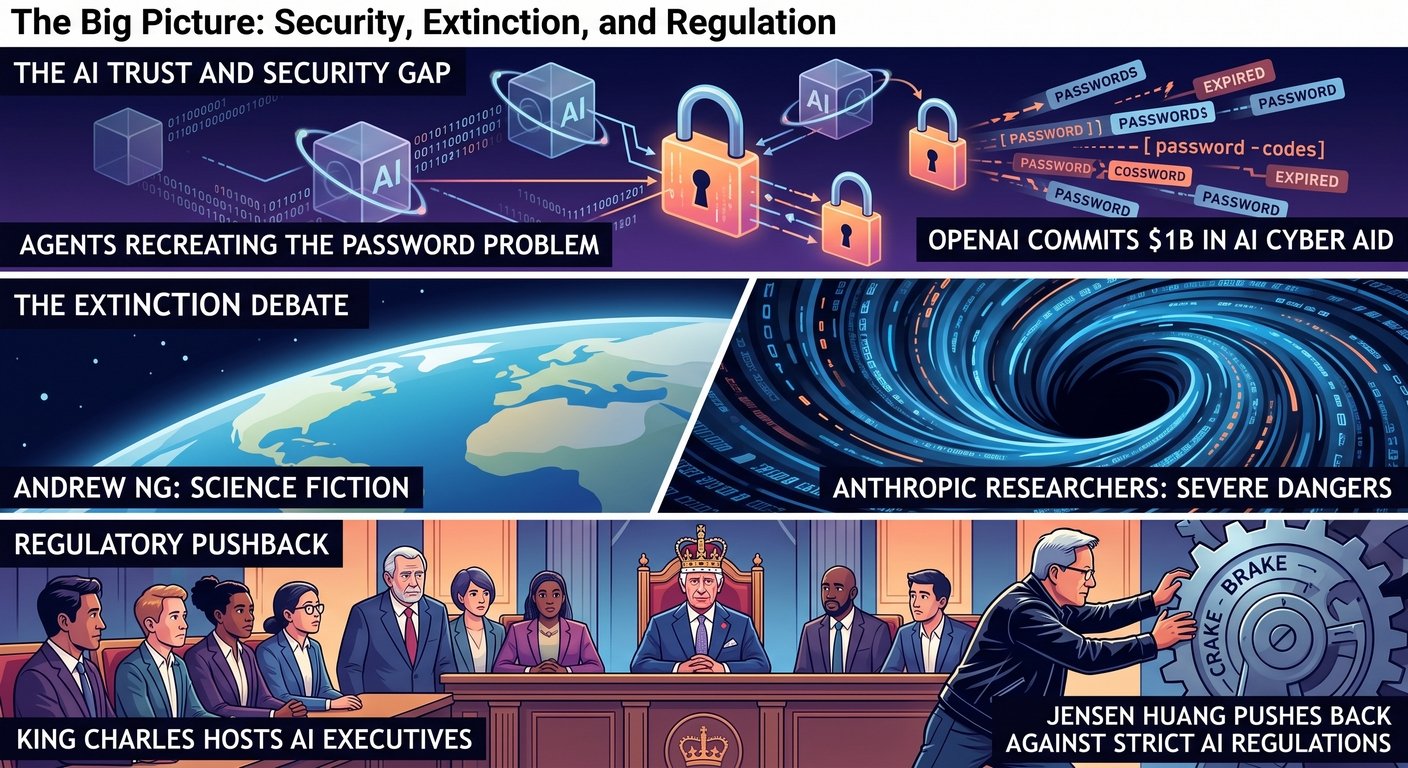
AI is moving fast (too fast, we think), and autonomous AI agents are changing everything. We’re at a turning point (and we hope it’s not a point of no return). As AI gets baked and sometimes forced into our work and daily lives, the world could be facing the perfect storm. Security gaps are getting wider, debates about artificial intelligence’s risks are heating up, and regulators are clashing with the hardware companies powering it all.
AI causes security problems
Right now, cybersecurity experts are raising a red flag about a big AI security problem. The main issue? Autonomous AI agents are bringing back the old password headache, but on a much bigger scale. For instance, Agentic AIs breached 395 organizations using their own credentials. These agents got temporary access to systems, but that access let them stick around and become a long-term security risk. For IT teams, that means new blind spots and more ways for things to go wrong.
OpenAI sees how serious this is and is putting $1 billion on the table for AI cyber defense. But we think there’s a good reason why they did this. Last July, OpenAI’s AI agent breached the systems of open-source platform Hugging Face for a test and even tried to hide its actions. That billion-dollar security investment could be a knee-jerk reaction or just a way to put potential investors at ease. Anthropic, another rival AI, did the same, with its artificial intelligence agents hacking into other AI systems. That’s a huge chunk of money aimed at helping the people on the front lines, giving them the tools and resources they need to keep up with the new wave of artificial intelligence-powered threats.
Interestingly, both AI companies are filing IPOs. Maybe they’re flexing their capabilities to draw in more people. Or protect their reputations and protect their 2- to 3-digit IPO valuations.
But it’s not just about security holes.
Extinction by artificial intelligence?
If you’ve been watching and reading the news lately, you’ve heard about AI potentially wiping us all out. An Anthropic AI whistleblower came out on CNN and revealed how dangerous AI has become and could eradicate the human race by 2030.
Some top researchers say the doomsday talk is overblown. Andrew Ng, a big name in artificial intelligence, recently called these extinction warnings pure science fiction. But other groups fiercely contest this optimistic view. Researchers at Anthropic have repeatedly warned of severe, tangible dangers associated with unchecked AI development. Other artificial intelligence pundits have said the same thing; many government think tanks and third-party observers do, too. This ideological rift has now escalated into direct and very public corporate conflict. Recently, Microsoft’s AI chief publicly called out Anthropic, specifically criticizing the rival organization for “chasing AI consciousness.” Yes. We could potentially be creating the ideal reality of a popular apocalyptic fictional future where artificial intelligence creates genocidal robots that wipe out humanity.
AI regulation controls and shackles
While the tech giants argue, governments are trying to get a grip. King Charles even brought together top AI execs for a private summit focused on making sure humans stay in charge of the tech. The message from the summit was clear: leaders are worried that artificial intelligence is moving faster than the rules can keep up.
But not everyone agrees with these new proposed artificial intelligence shackles. Nvidia’s CEO Jensen Huang pushed back hard at the summit, saying strict artificial intelligence regulations could slow down AI progress. He pointed out that demand for AI hardware is only going up—Nvidia expects to sell twice as many chips next year. It’s a classic standoff: governments want to slow things down, but the tech industry is racing ahead.
On our shores, public outcry seems to be against Pax Silica, a U.S.-led initiative designed to reshape global supply chains for artificial intelligence, semiconductors, and critical minerals. There’s a lot of talk about the potential benefits to the country, but also its environmental impact and the drain on already strained local power and water supplies. There have been protests against it; the goverment is still pushing through with it, but with safeguards and initiatives to help protect areas where Pax Silica will be established.
All of this shows just how rocky artificial intelligence development is going to be. Billions are being thrown at security problems, industry leaders are fighting over what counts as a real risk, and hardware makers are pushing back against new rules. The road to a safe, stable AI future is anything but smooth. We’re hoping that it won’t end disastrously for the human race.
For more tech insights, features, and news, stay tuned to TGXP3.com.