
Global Sapphire Filipinas, an IT systems integrator, recently launched Whizkey Technology Services, a Filipino-owned MSP (managed service provider). If you Google or AI search for what an MSP is, it handles a business’s routine IT infrastructure, networks, security, and end-user systems using a business service subscription model. An MSP monitors operations 24/7 to prevent downtime and lower operating costs.
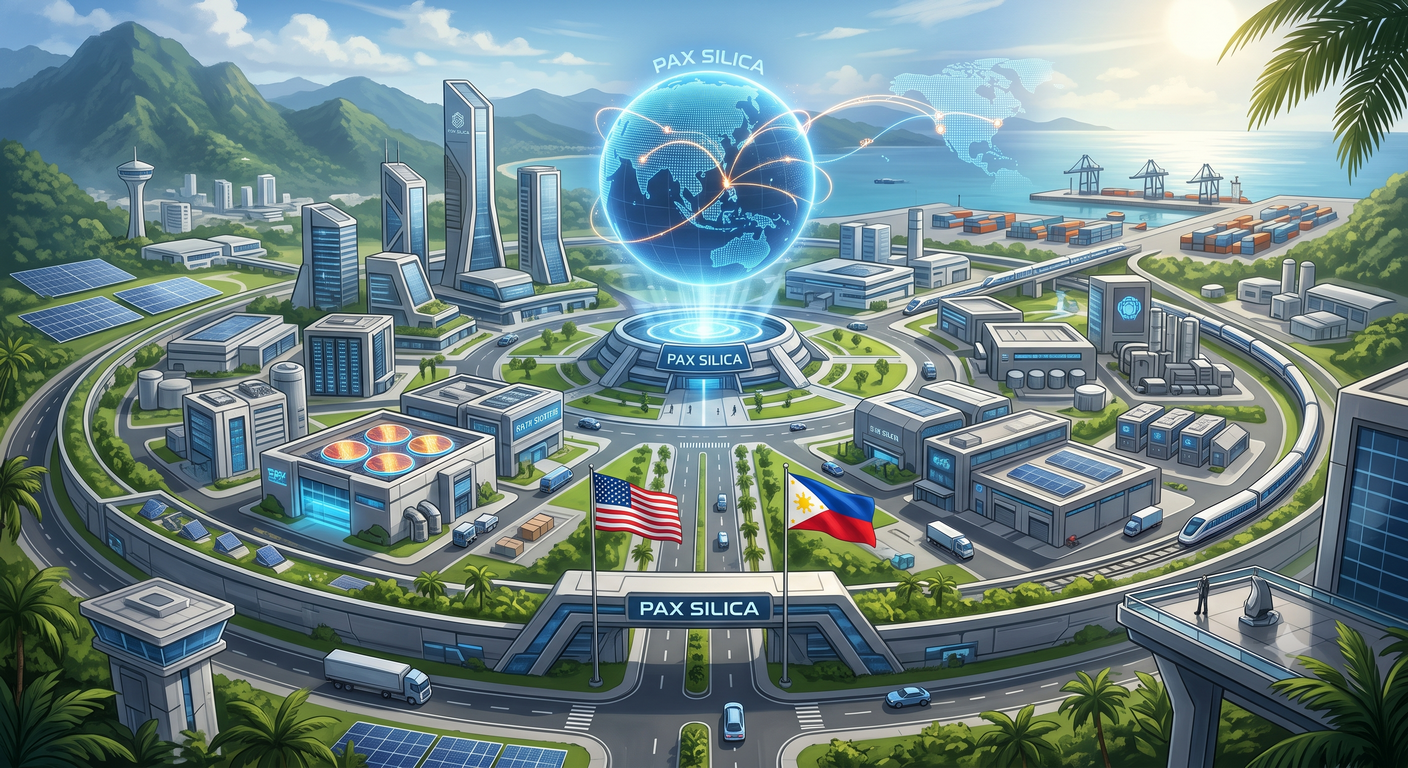
During the launch, I had to ask them their thoughts on Pax Silica. Right now, it is one of the most talked-about topics in the IT industry and even in socio-civic circles. Pax Silica is an ambitious U.S.-led initiative designed to reshape global supply chains for artificial intelligence, semiconductors, and critical minerals. With the Philippines at the heart of this plan, building a 1,619-hectare advanced manufacturing hub in New Clark City in Subic Clark.
There’s been a lot of talk about its scale, potential revenue, and tens of thousands of jobs it could provide to Filipinos. But there’s also talk about its environmental impact, energy grid strain, water resource demands, potential displacement, and questions of sovereignty.
We asked Whizkey Technology Services officers, professionals who have decades of experience in the IT industry between them, two questions: Is the Philippines ready for it, and are they ready for it?

There is no doubt that the scale of Pax Silica is unprecedented, and it brings with it a host of challenges. These issues deserve urgent attention.
Whizkey Technology Services (WTS) CTO, Eduard Dela Cruz, puts it: “I think, with the collaboration of the DICT, our education sector, and even the consumers, they need to check whether we’re more than capable of handling those challenges. For example, power. We have the cost of power right now, which is increasing. So, for us to fully embrace it, they need to create an organization that would actually help them create a legislative ruling to accommodate those challenges, even the internet. Based on what they’re doing right now, they’re in that phase, and I hope for the next few months we’ll have a firm directive to actually embrace this technology.”
What stands out to them is the necessity of collaboration. As WTS CEO, Mary Ann Palad says: “I don’t think one organization, or even our government for that matter, will be able to do everything with just things on their hands. It has to be a collaborative effort of all industries or organizations concerned—so the government, plus companies like us, and all others. We all have our niche; we all have our expertise. At the end of the day, it’s all about collaboration.”
Having worked in the IT industry for over two decades, WTS Chairman Ricky Palad shares that their company is ready to support Pax Silica. “That’s the reason why we’re here; we’re waiting for that because we feel that we can complement and ride on that wave.”
But is the Philippines truly ready? As Ricky emphasizes, readiness is not instantaneous. “I don’t think a lot of countries are instantly ready for that because you need to build a lot of infrastructure. Not only infrastructure, but policies, logistics, everything. There are two sides to the coin when you discuss Paxilica: one is the environment side—the effects of what will happen to the environment—and the other is business. I can tackle the business side because we are in the business side. With any change, there’s always an issue. More so for people who are not in that industry, who lack technology savvy; they will always find it difficult. But I can tell you that in terms of manpower, the Philippines has one of the best IT pools—whether it’s developers, database, network, or security. We have that. In fact, among all the Asian countries, we are the leading in terms of those skills. Coupled with the fact that we’re an English-speaking country.”
The Philippines was chosen as a partner for Pax Silica largely because of its existing infrastructure and skilled workforce, which significantly reduces the risk of project failure compared to other countries lacking these advantages. While challenges such as electricity reliability remain, Ricky believes that their strong foundation and readiness to build further make their company well-positioned for success. As the saying goes, “Build it, and they will come.” It is crucial to ensure transparency and engage all relevant sectors before moving forward, addressing key questions and communicating clearly to gain public support.
As Mary Ann Palad reminds us, “Whiskey, as a company, has actually invested in technical people. Our true assets are our technical people. I would say, and I can vouch for that, that I’ve invested heavily in my technical people in terms of their expertise and continuously growing and updating their credentials because that’s what’s important.”
She added that with technology evolving rapidly—laptops and gadgets updating every six months, skill sets must also keep up. “We take pride in our technical team’s ability to adapt and collaborate with other sectors to meet these challenges head-on.”
In summary, while Pax Silica presents daunting hurdles, it also offers the Philippines an opportunity to showcase its strengths. Whizkey Technology Services is committed to contributing our expertise and working collaboratively to ensure the success of this transformative initiative.
For more tech perspectives and insights, stay tuned to TGXP3.com.